Sign in
Edition of 20:00 CETFriday, July 10, 2026
311 outlets · 17 languages126 briefings today
Geopolitics & PoliticsWednesday, July 8, 2026

US and Iran trade strikes as Pezeshkian links World Cup restrictions to wider policy

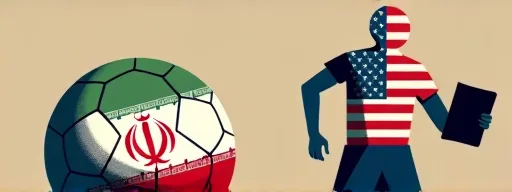
Military exchanges in the Gulf and the collapse of an interim oil-export waiver unfolded as Tehran accused Washington of using the 2026 tournament to humiliate its national team.

The United States and Iran carried out reciprocal military strikes across the Persian Gulf on 7–8 July, while Washington revoked a temporary licence that had permitted Iranian crude exports under a June memorandum of understanding. The escalation followed reported Iranian attacks on three commercial vessels transiting the Strait of Hormuz. In parallel, Iranian President Masoud Pezeshkian used a post on X to compare the US government’s conduct as host of the 2026 FIFA World Cup to its foreign policy, writing that both are marked by “bending rules, bullying rivals, creating obstacles, and cheating.” Iranian state-linked media separately reported that Washington had imposed travel restrictions on Iran’s squad, confining it to a training base in Tijuana, Mexico, and permitting entry to US territory only shortly before matches—a measure Tehran said no other participating nation faced.

According to US Central Command, American forces struck more than 80 Iranian military targets, including air-defence systems, command-and-control networks, coastal radar installations, anti-ship missile capabilities, and over 60 fast-attack craft of the Islamic Revolutionary Guard Corps. The operation was described as a response to what Washington called Iranian attacks on the Marshall Islands-flagged M/T Al Rekayyat, the Saudi-flagged M/T Wedyan, and the Liberian-flagged M/T Cyprus Prosperity. Speaking on the sidelines of a NATO summit in Ankara, President Donald Trump said the interim understanding with Iran was effectively “over” and that further negotiations were “a waste of time,” though he added that American negotiators could continue talking if they wished. The US Treasury concurrently revoked the oil-export waiver, with an official characterising the military and economic measures as punishment for the shipping incidents.

Iran’s Islamic Revolutionary Guard Corps announced it had conducted a joint missile and drone operation against 85 US military facilities in Bahrain and Kuwait, describing it as an “initial response” to American strikes. State broadcaster IRIB reported that the Qatari-linked tanker Al Rekayyat was targeted after allegedly ignoring repeated Iranian warnings and sailing through an Omani shipping route with US naval support. President Pezeshkian, in his social media statement, said Iran “rejects such games” and “stands firmly for our rights.” Ebrahim Rezaei, spokesman for the Iranian parliament’s National Security and Foreign Policy Committee, was quoted by Iranian outlets as saying the country was not intimidated and was “ready to fight any evil.” Tehran also condemned both Washington and FIFA over the travel restrictions imposed on its football team, arguing they violated principles of fairness expected of a World Cup host.

The military exchanges and the collapse of the oil-export arrangement occurred as Iran conducted a four-day funeral procession for Supreme Leader Ali Khamenei, whose burial was scheduled for the following day. The US warned that its forces remained prepared to respond if Tehran violated the ceasefire again, while Iran’s armed forces stated they would not permit outside interference in the Strait of Hormuz. The memorandum of understanding signed in June is now considered void by Washington, and no new diplomatic framework has been announced.

Divergence — who tells it how
Axis: Posizione verso USA
30%Medium
4 blocs · positions from −0.80 to 0.00
Critici verso USANeutrali
INDRUSIRNLAT
Divergence between press blocs
Indian & South Asian press0.00neutral
Russian & CIS press−0.50critical
Iranian & allied press−0.80critical
Latin American press−0.20neutral
US press outlets are not represented in this analysis.
Indian & South Asian press0.00
Voice

The event is recorded as a diplomatic statement in a context of tension, without added judgment.

Mechanismdistanziamento

By presenting the statement without commentary, the press creates an appearance of objective fact, distancing itself from the conflict.

Omission

The US perspective on the military strikes and any justification for travel restrictions are omitted, which would complicate the neutral frame.

DetachmentPragmatism
Russian & CIS press−0.50
Voice

Russia denounces American aggression and supports the Iranian critique.

Mechanismescalation simmetrica

By linking the World Cup analogy to US military strikes, the narrative creates a causal chain that justifies Iran's position.

Omission

Any mention of Iran's own provocative actions or the context of US strikes is omitted, undermining the victim narrative.

AlarmOutrage
Iranian & allied press−0.80
Voice

Iran rejects American games and firmly stands for its rights.

Mechanismpersonificazione dello stato

The president's personal tweet is treated as the voice of the entire nation, personifying the state and the US as a bully.

Omission

Internal dissent or criticism of the president's statement, as well as Iranian actions that might have provoked US strikes, are omitted.

OutrageVictimhoodAlarm
Latin American press−0.20
Voice

Latin America observes the diplomatic clash between Iran and the US, reporting statements without openly taking sides.

Mechanismuniversalizzazione

By presenting the issue as a matter of international norms and fair play, the press frames the conflict as a global concern.

Omission

Detailed analysis of the military escalation and specific grievances of both sides are omitted, focusing on the rhetorical exchange.

DetachmentPragmatism

Broaden your view

Read more
Breaking
Yamal declares Spain and France the tournament's best after Merino's late winner·France and Spain Set for Semifinal Clash After Contrasting Quarter-Final Victories·Courtois exits in tears, Lammens blunder sends Spain into World Cup semis·Ederson’s United Move Collapses Over Knee Doubts, Club Pivots to Santos·When Haaland’s goals reached the cradle: Peru’s newborn Vikings·Neymar’s post‑World Cup holiday in Orlando deepens uncertainty over his Santos future·Meta disables Muse Image AI tool after global backlash over opt-out use of public photos·Russian Gasoline Output Covers Only 65% of Demand After Latest Drone Strikes·Yamal declares Spain and France the tournament's best after Merino's late winner·France and Spain Set for Semifinal Clash After Contrasting Quarter-Final Victories·Courtois exits in tears, Lammens blunder sends Spain into World Cup semis·Ederson’s United Move Collapses Over Knee Doubts, Club Pivots to Santos·When Haaland’s goals reached the cradle: Peru’s newborn Vikings·Neymar’s post‑World Cup holiday in Orlando deepens uncertainty over his Santos future·Meta disables Muse Image AI tool after global backlash over opt-out use of public photos·Russian Gasoline Output Covers Only 65% of Demand After Latest Drone Strikes·
Upd. 07:31 PM4 languages · 7 outlets
PreviousGeopolitics & PoliticsNext
7 outlets|4 languages|3 min read
Wednesday, July 8, 2026

US and Iran trade strikes as Pezeshkian links World Cup restrictions to wider policy

Military exchanges in the Gulf and the collapse of an interim oil-export waiver unfolded as Tehran accused Washington of using the 2026 tournament to humiliate its national team.

The United States and Iran carried out reciprocal military strikes across the Persian Gulf on 7–8 July, while Washington revoked a temporary licence that had permitted Iranian crude exports under a June memorandum of understanding. The escalation followed reported Iranian attacks on three commercial vessels transiting the Strait of Hormuz. In parallel, Iranian President Masoud Pezeshkian used a post on X to compare the US government’s conduct as host of the 2026 FIFA World Cup to its foreign policy, writing that both are marked by “bending rules, bullying rivals, creating obstacles, and cheating.” Iranian state-linked media separately reported that Washington had imposed travel restrictions on Iran’s squad, confining it to a training base in Tijuana, Mexico, and permitting entry to US territory only shortly before matches—a measure Tehran said no other participating nation faced.

According to US Central Command, American forces struck more than 80 Iranian military targets, including air-defence systems, command-and-control networks, coastal radar installations, anti-ship missile capabilities, and over 60 fast-attack craft of the Islamic Revolutionary Guard Corps. The operation was described as a response to what Washington called Iranian attacks on the Marshall Islands-flagged M/T Al Rekayyat, the Saudi-flagged M/T Wedyan, and the Liberian-flagged M/T Cyprus Prosperity. Speaking on the sidelines of a NATO summit in Ankara, President Donald Trump said the interim understanding with Iran was effectively “over” and that further negotiations were “a waste of time,” though he added that American negotiators could continue talking if they wished. The US Treasury concurrently revoked the oil-export waiver, with an official characterising the military and economic measures as punishment for the shipping incidents.

Iran’s Islamic Revolutionary Guard Corps announced it had conducted a joint missile and drone operation against 85 US military facilities in Bahrain and Kuwait, describing it as an “initial response” to American strikes. State broadcaster IRIB reported that the Qatari-linked tanker Al Rekayyat was targeted after allegedly ignoring repeated Iranian warnings and sailing through an Omani shipping route with US naval support. President Pezeshkian, in his social media statement, said Iran “rejects such games” and “stands firmly for our rights.” Ebrahim Rezaei, spokesman for the Iranian parliament’s National Security and Foreign Policy Committee, was quoted by Iranian outlets as saying the country was not intimidated and was “ready to fight any evil.” Tehran also condemned both Washington and FIFA over the travel restrictions imposed on its football team, arguing they violated principles of fairness expected of a World Cup host.

The military exchanges and the collapse of the oil-export arrangement occurred as Iran conducted a four-day funeral procession for Supreme Leader Ali Khamenei, whose burial was scheduled for the following day. The US warned that its forces remained prepared to respond if Tehran violated the ceasefire again, while Iran’s armed forces stated they would not permit outside interference in the Strait of Hormuz. The memorandum of understanding signed in June is now considered void by Washington, and no new diplomatic framework has been announced.

Divergence — who tells it how
Axis: Posizione verso USA
30%Medium
4 blocs · positions from −0.80 to 0.00
Critici verso USANeutrali
INDRUSIRNLAT
Divergence between press blocs
Indian & South Asian press0.00neutral
Russian & CIS press−0.50critical
Iranian & allied press−0.80critical
Latin American press−0.20neutral
US press outlets are not represented in this analysis.
Indian & South Asian press0.00
Voice

The event is recorded as a diplomatic statement in a context of tension, without added judgment.

Mechanismdistanziamento

By presenting the statement without commentary, the press creates an appearance of objective fact, distancing itself from the conflict.

Omission

The US perspective on the military strikes and any justification for travel restrictions are omitted, which would complicate the neutral frame.

DetachmentPragmatism
Russian & CIS press−0.50
Voice

Russia denounces American aggression and supports the Iranian critique.

Mechanismescalation simmetrica

By linking the World Cup analogy to US military strikes, the narrative creates a causal chain that justifies Iran's position.

Omission

Any mention of Iran's own provocative actions or the context of US strikes is omitted, undermining the victim narrative.

AlarmOutrage
Iranian & allied press−0.80
Voice

Iran rejects American games and firmly stands for its rights.

Mechanismpersonificazione dello stato

The president's personal tweet is treated as the voice of the entire nation, personifying the state and the US as a bully.

Omission

Internal dissent or criticism of the president's statement, as well as Iranian actions that might have provoked US strikes, are omitted.

OutrageVictimhoodAlarm
Latin American press−0.20
Voice

Latin America observes the diplomatic clash between Iran and the US, reporting statements without openly taking sides.

Mechanismuniversalizzazione

By presenting the issue as a matter of international norms and fair play, the press frames the conflict as a global concern.

Omission

Detailed analysis of the military escalation and specific grievances of both sides are omitted, focusing on the rhetorical exchange.

DetachmentPragmatism

This story appeared in

7 outlets · 4 languages

Broaden your view

From Economy & Markets

Washington Eases Export Curbs on UAE, Citing Role in Iran Strikes

3 languages · 9 outlets

From Technology

China recovers orbital rocket booster at sea in first, narrowing reusable launcher gap

8 languages · 14 outlets

From Science & Health

Carney’s Saudi Visit and Iran Overture Signal Canada’s Trade-First Pivot

2 languages · 5 outlets

Read more